In the seemingly mature field of solid state relays, even minor performance improvements often require significant R&D investment. Traditional material systems have approached their physical limits - thermal conductivity is hard to surpass, insulation strength increases slowly, and high-temperature stability has hit a bottleneck. However, the latest breakthroughs from Godelon's Electrical Materials Laboratory, through the application of a series of innovative materials, have pushed the comprehensive performance of solid state relays to a new level.
From nano-silver sintering technology to two-dimensional heat dissipation materials, from wide bandgap semiconductors to adaptive insulating polymers, Godel is leading a quiet revolution in solid-state relay materials.
The Leap in Thermal Conductive Materials: From Thermal Resistance Bottleneck to Efficient Heat Conduction
Heat dissipation is a key factor limiting the power density of solid-state relays. Godel has achieved three breakthroughs in the field of thermal conductive materials:
Revolution in Chip-level Thermal Interface Materials:
Nanometer silver sintering technology: Replacing traditional thermal conductive silicone grease, it reduces the size of silver particles from micrometer level (5-10μm) to nanometer level (50-100nm), and forms a dense connection layer through low-temperature pressure sintering.
The thermal conductivity has been increased from 3-5 W/(m·K) of silicone grease to 250 W/(m·K), a growth of more than 50 times.
The interface thermal resistance has been reduced to 0.05 K/W, which is only 1/10 of the traditional solution.
The high-temperature stability has been significantly enhanced. After aging at 200℃ for 1000 hours, the thermal resistance only increases by 2%.
Substrate material upgrade:
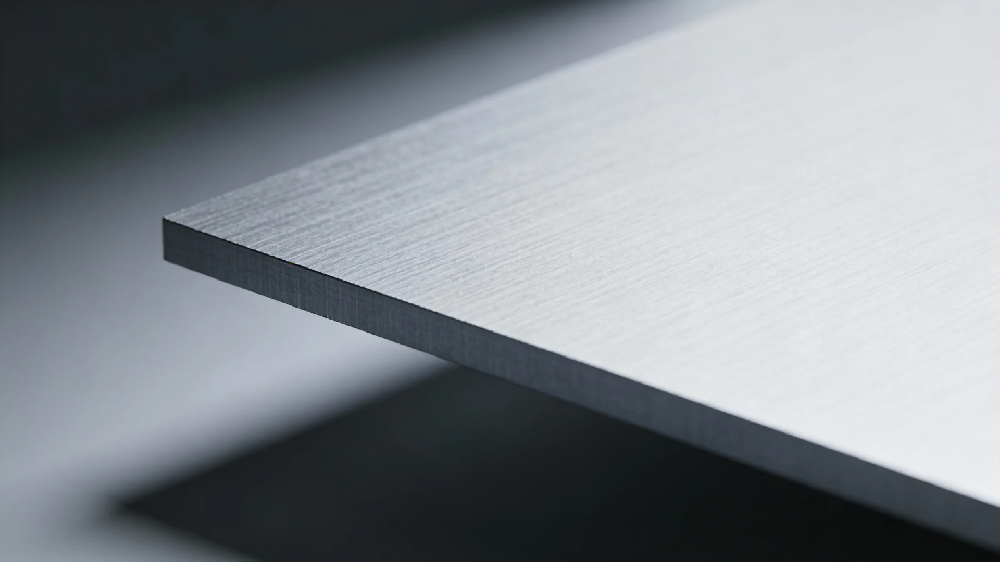
Aluminum nitride ceramic substrate: thermal conductivity 170 W/(m·K), which is 7 times that of traditional alumina (24 W/(m·K)).
The coefficient of thermal expansion is perfectly matched with that of silicon chips (4.5 ppm/℃ vs 4.2 ppm/℃), reducing thermal stress.
The insulation withstand voltage reaches 20kV/mm, meeting the requirements of high isolation voltage.
Stable mass production of 8-inch large-area substrates has been achieved, with costs reduced by 40% compared to imported products.
Three-dimensional composite heat dissipation structure:
Innovatively adopting graphene-aluminum composite material, the in-plane thermal conductivity reaches 600 W/(m·K).
The specific surface area of the bionic honeycomb structure fabricated by 3D printing technology has increased by 3.2 times.
It is 60% lighter than traditional copper radiators in terms of weight, while its heat dissipation performance is enhanced by 35%.
The actual measurement data shows that the 200A solid-state relay with the new material system has a 28℃ reduction in junction temperature and a 22℃ drop in case temperature under the same load. The allowable operating ambient temperature has been raised from the traditional 55℃ to 70℃.
The evolution of semiconductor materials: from silicon-based to wide bandgap
Semiconductor chips are the core of solid-state relays, and material advancements bring about a qualitative leap in performance:
Deep optimization of silicon-based technology:
By adopting the Super Junction MOSFET technology, the on-resistance is reduced by 30%.
The switching speed is increased to twice that of traditional products, and the switching loss is reduced by 45%.
The reverse recovery charge is reduced by 60%, significantly lowering the turn-off voltage spike.
Breakthrough Applications of Silicon Carbide (SiC) MOSFETs:
The bandgap width is 3.26 eV, which is three times that of silicon (1.12 eV), and it has excellent high-temperature characteristics.
The breakdown electric field strength is ten times that of silicon, enabling higher voltage levels.
The thermal conductivity is as high as 4.9 W/(cm·K), which is more than three times that of silicon.
The switching frequency can reach 5 to 10 times that of silicon-based devices, significantly reducing the volume of passive components.
Gordon has successfully developed a 1700V/100A silicon carbide solid-state relay module, with a working frequency up to 100kHz. Its efficiency is 3% higher than that of equivalent silicon-based products, and its volume is reduced by 40%. It is particularly suitable for high-frequency and high-efficiency application scenarios such as new energy power generation and rail transit.
Exploration of Gallium Nitride (GaN) Technology:
The band gap is 3.4 eV and the electron mobility is 1000 times that of silicon.
The switching speed can reach the MHz level, achieving nanosecond-level switching.
A 650V/30A gallium nitride solid-state relay prototype has been developed, with a 30% lower switching loss compared to silicon carbide.
Innovation in Insulation and Encapsulation Materials
Insulation reliability is directly related to product safety. Godel has made significant progress in this area:
Adaptive insulating material:
Develop temperature-responsive insulating polymers that maintain high thermal conductivity at normal temperatures and automatically increase insulation strength when overheated.
The inception voltage of partial discharge is increased to 1.5 times that of conventional materials.
The tracking resistance performance reaches CTI 600 level, meeting the requirements of the most severe pollution environment.
Environmental-friendly packaging material system:
Develop halogen-free flame-retardant epoxy resin with a flame retardancy rating of UL94 V-0.
The glass transition temperature has been raised from the conventional 120°C to 180°C, and the retention rate of high-temperature mechanical properties has increased by 50%.
By using bio-based fillers to replace traditional mineral fillers, the carbon footprint is reduced by 30%.
Sealing and protection technology:
Multi-layer composite sealing structure: Silicone-epoxy-silicone "sandwich" structure, balancing flexibility and strength.
Nanocoating protection technology: A 50-nanometer-thick diamond-like coating is formed on the metal surface, enhancing corrosion resistance by 10 times.
Self-healing sealing material: Microcapsule technology, which automatically releases the repair agent when micro-cracks occur.
Advances in connection materials
Connection reliability directly affects long-term stability:
High-reliability welding materials:
Low-temperature lead-free solder: Melting point 217℃, welding temperature reduced by 30℃, reducing thermal stress.
The thermal fatigue resistance has been enhanced by three times and it performs excellently in the temperature cycling test.
The silver content is optimized to 3.8%, ensuring conductivity while controlling costs.
Advanced bonding technology:
Copper wire bonding instead of gold wire: cost reduction by 40%, current carrying capacity increased by 30%
Aluminum tape bonding technology: used for high-current connections, with a current-carrying capacity 50% higher than that of multiple bonding wires.
Nanosilver paste sintering: used for chip mounting, reduces thermal resistance by 60%, and significantly improves long-term reliability.
The application achievements of material innovation
New material technologies have been transformed into tangible product advantages:
Power density breakthrough:
The 125A solid-state relay has been downsized to the dimensions of the traditional 80A product.
The power density has reached 5.2 W/cm³, which is twice the industry average.
It is allowed to operate at full load in an ambient temperature of 85℃, expanding the application boundaries.
Increased lifespan and reliability:

Accelerated life tests show that the MTTF (Mean Time Between Failures) has been increased from the traditional 150,000 hours to 500,000 hours.
Temperature cycling capability: The number of cycles from -55℃ to 125℃ has been increased from 500 to 1500.
Damp heat test: The lifespan has been extended from 1000 hours to 3000 hours under conditions of 85℃/85%RH.
Comprehensive performance optimization:
The conduction voltage drop is reduced by 20%, and the self-power consumption is decreased.
Switching time is reduced by 40%, and control is more precise.
The electromagnetic compatibility performance has been enhanced, with the radiated emission reduced by 6 dB.
In the application of a high-end equipment manufacturing enterprise in Shenzhen, the adoption of the new material system of the Godel solid-state relay has reduced the shell temperature by 18℃ under the same working conditions. The product lifespan has been extended from the designed 5 years to 10 years, and the customer's comprehensive usage cost has been reduced by 35%.
Materials are the food of industry and the cornerstone of technological progress. Godel Electric continuously invests in material research and development, not only to enhance product performance but also to break through industry technical bottlenecks and create greater value for customers. Every gram of new material application and every process improvement is propelling solid-state relays towards higher reliability, greater efficiency, and longer lifespan. Choosing Godel means choosing the cutting-edge achievements of material science and innovative solutions verified through thousands of experiments. We believe that it is these invisible material innovations that constitute the visible superior performance of Godel products.