On the drilling platforms in the South China Sea, inside the detectors in the Mariana Trench, and at the relay stations of transoceanic cables, the extreme harshness of the marine environment poses almost cruel demands on electrical equipment - high pressure, corrosion, biofouling, and long-term unmanned maintenance. The failure rate of electrical control systems in traditional marine engineering is extremely high due to salt spray corrosion, pressure changes, and biological erosion, seriously affecting the safety and efficiency of marine resource development. Especially as deep-sea exploration advances towards the 10,000-meter abyss, the reliability of the control system directly relates to the safety of equipment worth hundreds of millions of yuan.
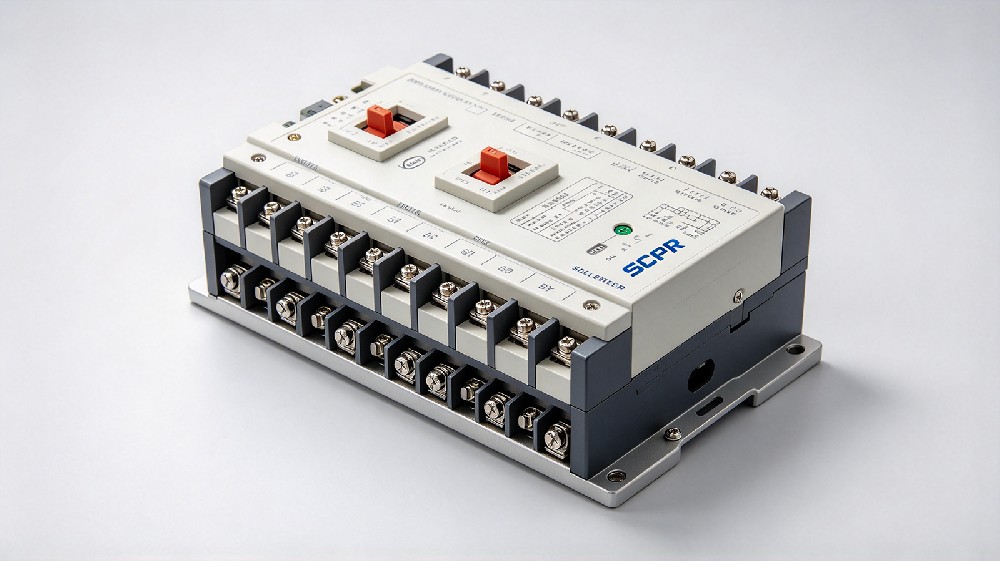
Golden Electric, in collaboration with the National Marine Technology Center, China Shipbuilding Industry Corporation and other institutions, has spent ten years on technological research and development to create a full range of solid-state relays specifically for marine engineering. These relays have been deeply applied in fields such as marine oil and gas, deep-sea exploration, marine observation, and offshore wind power, providing a solid and reliable control guarantee for the development of the blue economy.
Deep-sea Commitment in Offshore Oil and Gas Development
As oil and gas exploration advances into ultra-deep waters beyond 1,500 meters, control systems are confronted with unprecedented challenges:
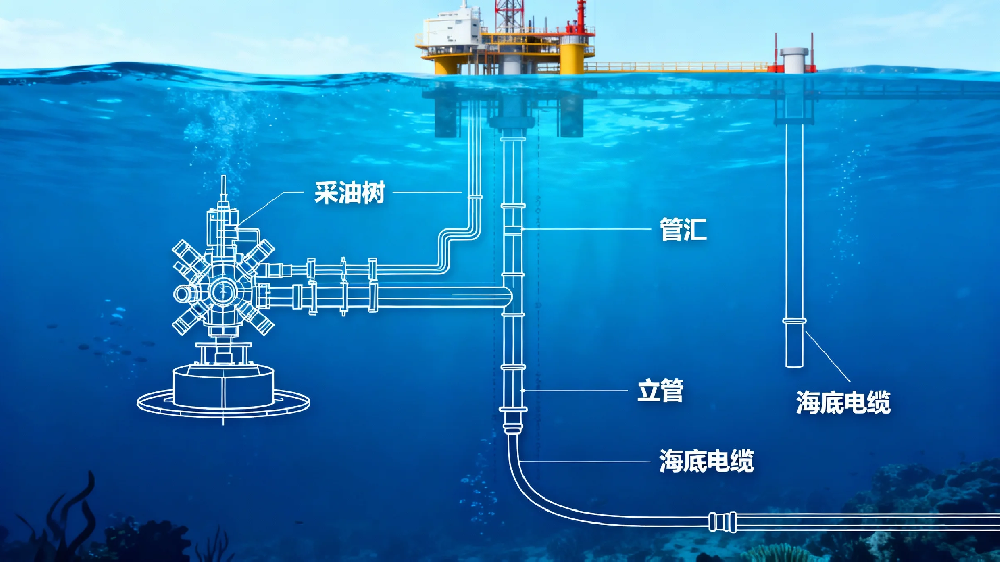
Underwater production system control:
Ultra-high pressure control: Subsea wellhead control, working pressure 15,000 psi (approximately 103 MPa)
Long-distance transmission: from the water surface to 1500 meters underwater, reliable transmission of electro-hydraulic composite control signals.
Redundant design: Triple redundant control architecture, single point failure does not affect system operation.
Corrosion protection: 316L stainless steel casing with special coating, corrosion resistance for 30 years.
Platform key system control:
Drilling control system: Top drive, mud pump and winch coordinated control, response time < 50ms
Fire and safety system: Combustible gas detection and emergency shut-off interlock, response time < 100ms.
Dynamic positioning system: Thruster thrust distribution control, positioning accuracy ±1 meter.
Life support systems: seawater desalination, sewage treatment, intelligent control of air conditioning and ventilation
Submarine Pipeline and Cable Control:
Pipeline pigging control: Intelligent pig launching and receiving control
Corrosion Monitoring: Pipeline Corrosion Online Monitoring System Control
Cable condition monitoring: Temperature, strain and fault location monitoring of submarine cables
Emergency shut-off: Leak detection and automatic shut-off control
In the "Deep Sea No.1" gas field project in the South China Sea, the 1,500-meter deepwater control system provided by Godeon has been operating continuously for three years without any faults, ensuring the stable production of 3 billion cubic meters of natural gas annually.
The Extreme Challenges of Deep-Sea Exploration Equipment
From the 7,000-meter "Jiaolong" to the 11,000-meter "Fendouzhe", the requirements for control systems in deep-sea exploration are constantly pushing the limits.
Control system of manned submersible:
Life support system: Precise control of oxygen circulation and carbon dioxide absorption
Propulsion and attitude control: Multi-thruster vector control, positioning accuracy ±0.5 meters
Robotic arm control: The seven-function robotic arm offers precise control with a grasping force control accuracy of ±2N.
Emergency systems: ballast jettisoning, battery jettisoning, etc. emergency control
Unmanned Remotely Operated Vehicle (ROV):
Umbilical cord management control: Umbilical cord cable tension control to prevent entanglement and breakage.
High-definition video transmission: Fiber micro-cable power and signal integrated control
Sampling operation control: Precise control of rock drilling, biological sampling, and sediment sampling.
Autonomous operation capability: AI-based autonomous obstacle avoidance and operation planning
Deep-sea landers and gliders:
Buoyancy adjustment control: Precise control of the oil bladder volume, with an adjustment accuracy of ±5 ml.
Long-term on-duty control: Autonomous observation for over one year, power management efficiency > 85%
Data compression and storage: Intelligent compression and storage management of observational data
Satellite communication control: Control of satellite data transmission after surfacing
During the 10,000-meter deep dive mission of the "Striver", the control system provided by Gao Deng withstood the test of a depth of 10,909 meters and a pressure of 110 MPa, with all control nodes operating 100% normally.
The Green Power of Offshore Wind Energy
As offshore wind energy moves towards deeper waters and larger capacities, the challenges in operation and maintenance are becoming increasingly prominent:
Fan unit control:
Pitch control system: Salt spray corrosion-resistant design, pitch angle control accuracy ±0.1°
Yaw control system: Intelligent yaw based on wind direction and wind speed, response time < 1 second.
Converter control: High-reliability power conversion in salt spray environment, efficiency > 97%
Condition monitoring: Online monitoring of multiple parameters such as vibration, temperature, and corrosion.
Offshore substation control:
Power collection control: Power collection and voltage boosting control of multiple wind turbines
Reactive power compensation control: STATCOM/SVG dynamic reactive power compensation control
Submarine cable protection control: Overcurrent, overvoltage and differential protection for submarine cables
Black start capability: Autonomous recovery start after power grid failure
Operation and maintenance of vessels and equipment:
CTV control: Dynamic positioning control for personnel transfer vessels
SOV Control: Control of Large Equipment Hoisting on the Operation and Maintenance Mother Ship
Unmanned Aerial Vehicle (UAV) Control: Automatic Takeoff, Landing and Charging of Wind Turbine Inspection Drones
Underwater Robot: ROV Control for Foundation Scour Detection and Submarine Cable Inspection
At the Ruyang offshore wind farm in Jiangsu Province, the Godel control system has helped achieve a 99.2% equipment availability rate, with annual power generation exceeding the design value by 5% and operation and maintenance costs reduced by 30%.
The Blue Sentinels of the Marine Observation Network
From the coastal zone to the open ocean, a three-dimensional marine observation network is taking shape:
Shore-based observation station control:
Hydro-meteorological observation: multi-parameter automatic observation of waves, tide levels, water temperature and salinity
Water quality monitoring and control: Online monitoring of nutrients, heavy metals and organic matter
Ecological monitoring and control: Automatic sampling and analysis of plankton and benthic organisms
Video surveillance control: Remote video surveillance of coastal zone changes
Buoy and mooring system:
Large marine buoy: 10-meter buoy comprehensive observation and control, wind resistance capacity of level 12
Profile float: Argo float temperature, salinity and depth profile measurement control, profile depth 2000 meters
Mooring system: Long-term fixed-point observation in the deep sea, with continuous operation time of more than two years.
Communication control: intelligent multi-mode switching of satellite, radio and underwater acoustic communication
Shipborne observation system:
Underway observation control: ADCP, CTD, continuous underway observation of greenhouse gases
Towed body control: Depth and attitude control of towed multi-parameter measurement system
Shipborne Laboratory: Power Supply and Environmental Control for On-site Analytical Instruments
Data integration: Real-time integration and quality control of multi-source observational data
After the National Marine Observation Network adopted the Gondar control system, the data acquisition rate increased from 85% to 98%, and the real-time transmission delay of observation data was shortened from the hourly level to the minute level.
Extreme marine environment adaptability technology
The marine environment poses all-round challenges to electrical equipment:
Adaptation to high-pressure deep-water environments:
Pressure balance design: Pressure balance control between pressure-resistant compartments and non-pressure-resistant compartments
Pressure sensor: Full-range pressure measurement and control from 0 to 120 MPa
Pressure leakage detection: multi-level leakage detection and alarm
Pressure cycle endurance: 10,000 pressure cycle tests verified
Salt spray corrosion protection:
Triple protection system: plating, coating and packaging.
Material selection: Titanium alloy, Hastelloy, special stainless steel applications
Electrochemical protection: Cathodic protection and electrolytic anti-fouling technology
Regular maintenance design: Modular design facilitates the replacement of corroded components.
Biofouling prevention:
Anti-fouling coating technology: Low surface energy coatings reduce biofouling
Electrolytic anti-biofouling: Electrolyzing seawater to produce sodium hypochlorite for anti-biofouling technology
Ultrasonic anti-fouling: Ultrasonic anti-biofouling system control
Mechanical cleaning design: Structural design for ease of mechanical cleaning
Long-term reliability guarantee:
Accelerated aging test: 30-year accelerated aging test simulating marine environment
Reliability Modeling: Reliability Prediction Model Based on Marine Environmental Stress
Remote health monitoring: Remote monitoring of key parameters and health status assessment
Preventive maintenance: Condition-based preventive maintenance strategy
Intelligent operation and maintenance and remote management
The particularity of marine engineering requires an innovative operation and maintenance model:
Predictive maintenance system:
Digital twin model: Digital twin of marine equipment, simulating operational status
Fault prediction algorithm: Fault early warning based on machine learning
Remaining life prediction: Prediction of the remaining service life of key components
Maintenance decision support: Optimization of maintenance time and plans based on prediction
Remote operation and control:
Satellite communication control: Remote real-time control via satellite links
Delay compensation algorithm: Control algorithm compensation under communication delay
Autonomous operation capability: Autonomous operation capability in case of communication interruption
Operator training simulation: Operator training based on digital twin
Supply Chain and Logistics Optimization:
Optimization of spare parts inventory: Spare parts inventory strategy based on reliability
Maintenance window planning: Optimization of maintenance windows based on sea condition prediction
Personnel scheduling optimization: Personnel scheduling and safety control under adverse sea conditions
Optimization of vessel scheduling: Path and scheduling optimization of operation and maintenance vessels
Data Management and Services:
Observation data management: Fusion and management of multi-source marine observation data
Equipment Data Platform: Full Lifecycle Equipment Data Management
Knowledge base construction: Accumulation and sharing of marine engineering experience and knowledge
Decision Support System: Data-based Decision Support for Marine Engineering
Economic Benefits and Strategic Value
Gordon Marine Engineering Solutions create multiple values:
Direct economic benefits:
Reduce failure losses: Unplanned production stoppage losses of offshore platforms have been reduced by 50-70%.
Extend equipment lifespan: Increase the lifespan of key equipment by 30-50%
Reduce maintenance costs: Decrease in operation and maintenance costs by 30-40%
Improve homework efficiency: Increase homework efficiency by 20-30%
Technical and Safety Value:
Enhancing safety standards: Major accident risks reduced
Enhancing operational capabilities: Improving operational capabilities in adverse sea conditions
Promote technological breakthroughs: Breakthroughs in deep-sea equipment control technology
Cultivating professional talents: Training of marine engineering control professionals
Strategy and Industrial Value:
Security guarantee for resource security: Security guarantee for the development of marine oil and gas resources
Maritime rights and interests protection: Support from marine observation and detection capabilities
Industrial driving effect: Driving the development of the marine equipment industry chain
International competitiveness: Enhancing the international competitiveness of China's marine engineering industry
Investment return analysis:
Marine oil and gas projects: Payback period of 3 to 5 years, internal rate of return of 20 to 30%
Offshore wind power projects: Payback period of 5 to 7 years, internal rate of return of 15 to 25%
Deep-sea exploration equipment: Payback period of 4 to 6 years, internal rate of return of 18% to 28%
Marine observation network: Payback period of 6 to 8 years, internal rate of return of 12 to 20%
Future Trends and Frontier Exploration
Gordon Continues to Innovate in the Field of Marine Engineering:
Deep-sea and far-sea development technologies:
Life support control for manned submersible habitat at normal pressure in the undersea space station
Deep-sea mining: Control of polymetallic nodule mining vehicles and mineral transportation
Marine ranching: Intelligent control of deep-sea aquaculture workboats and cages
Marine City: Energy and Resource Management for Floating Marine Communities
New Technologies for Marine Energy:
Ocean Thermal Energy Conversion (OTEC) power generation system control
Wave energy utilization: Control and power collection of multiple wave energy devices
Control of Osmotic Power Generation System for Salinity Gradient Energy Development
Marine hydrogen energy: Control and storage and transportation of offshore hydrogen production platforms
Polar marine engineering:
Icebreaker Control: Electric Propulsion and Maneuvering in Ice Zones for Polar Icebreakers
Ice drilling: Environmental Adaptation and Control of Arctic Ice Drilling Platforms
Polar observation: Long-term observation equipment in polar regions adapting to low-temperature environments
Under-ice exploration: Navigation and communication control of under-ice robots
Marine ecological restoration:
Coral Reef Restoration: Environmental Control for Coral Cultivation and Transplantation
Seagrass bed restoration: Seagrass seed sowing and growth monitoring
Ecological artificial reef: Environmental monitoring of artificial fish reefs
Pollution control: Equipment control for marine oil pollution and plastic pollution治理:海洋油污、塑料污染治理装备控制
Guided by the national strategy of building a strong maritime country, Godelon Electric will continue to focus on the blue economy sector, providing reliable control technology in extreme environments to support the sustainable development of marine resources and the protection of marine ecology. From the azure shallow seas to the pitch-black abyss, from the splashing waves to the silent depths of ten thousand meters, Godelon solid state relays are quietly safeguarding every attempt of mankind to explore the ocean.
Choosing Gorden Marine Engineering Solutions means choosing a commitment to the blue future and taking on the responsibility of deep-sea exploration. Let's join hands and use innovative control technology to unveil the mysteries of the ocean, open up new space for human sustainable development, and contribute solid technical strength to building a maritime power.